In recent years, the world has witnessed a surge in interest and demand for hemp-based products, particularly CBD oil. One term frequently arises in CBD oil discussions is “PCR hemp oil.” But what exactly is PCR hemp oil, and why is it gaining popularity?
This comprehensive guide will delve into the fascinating world of PCR hemp oil, exploring its origins, extraction methods, potential benefits, and how it differs from other types of CBD oil.
What is PCR Hemp Oil?
PCR stands for “Phytocannabinoid-Rich,” which refers to a type of CBD oil encompassing a diverse array of phytocannabinoids. These include CBD (cannabidiol) and other beneficial compounds found naturally in hemp plants. These include terpenes, flavonoids, and essential fatty acids.
PCR hemp oil is derived from hemp and is known for its comprehensive cannabinoid profile, providing potential synergistic effects due to combining multiple compounds.
Unlike isolated CBD products, which contain only CBD, PCR hemp oil offers a full spectrum of cannabinoids and compounds. And working together synergistically to produce what is commonly referred to as the “entourage effect.”
PCR Hemp Oil Extraction Process:
The extraction process plays a crucial role in obtaining PCR hemp oil. The most common method is supercritical CO2 extraction, which involves using carbon dioxide under high pressure and low temperature to extract the cannabinoids and other beneficial compounds from the hemp plant.
This method ensures a clean and efficient extraction, preserving the integrity and potency of the phytocannabinoids.
The Potential Benefits of PCR Hemp Oil:
- Enhanced Therapeutic Effects: The entourage effect, resulting from the combination of various phytocannabinoids and compounds, is believed to enhance the overall therapeutic effects of PCR hemp oil. It offers a more comprehensive and effective approach to supporting overall well-being and balance.
- Broad-Spectrum Support: The diverse array of cannabinoids and other plant compounds found in PCR hemp oil may contribute to a broader spectrum of support for the endocannabinoid system (ECS). The ECS plays a vital role in maintaining homeostasis in the body, and by supporting its functions, PCR hemp oil may promote overall wellness.
- Natural Relief and Relaxation: PCR hemp oil is highly sought after due to its potential to offer natural relief from occasional discomfort and promote relaxation. Many individuals seek out PCR hemp oil for its potential therapeutic benefits and soothing properties, which may contribute to overall well-being and a sense of calm. Many individuals use PCR hemp oil to help manage stress, support a calm mood, and enhance their overall well-being.
- Anti-Inflammatory Properties: Some research suggests that PCR hemp oil may possess anti-inflammatory properties, benefiting those experiencing inflammatory conditions or seeking post-workout recovery support.
PCR Hemp Oil vs Other Types of CBD Oil:
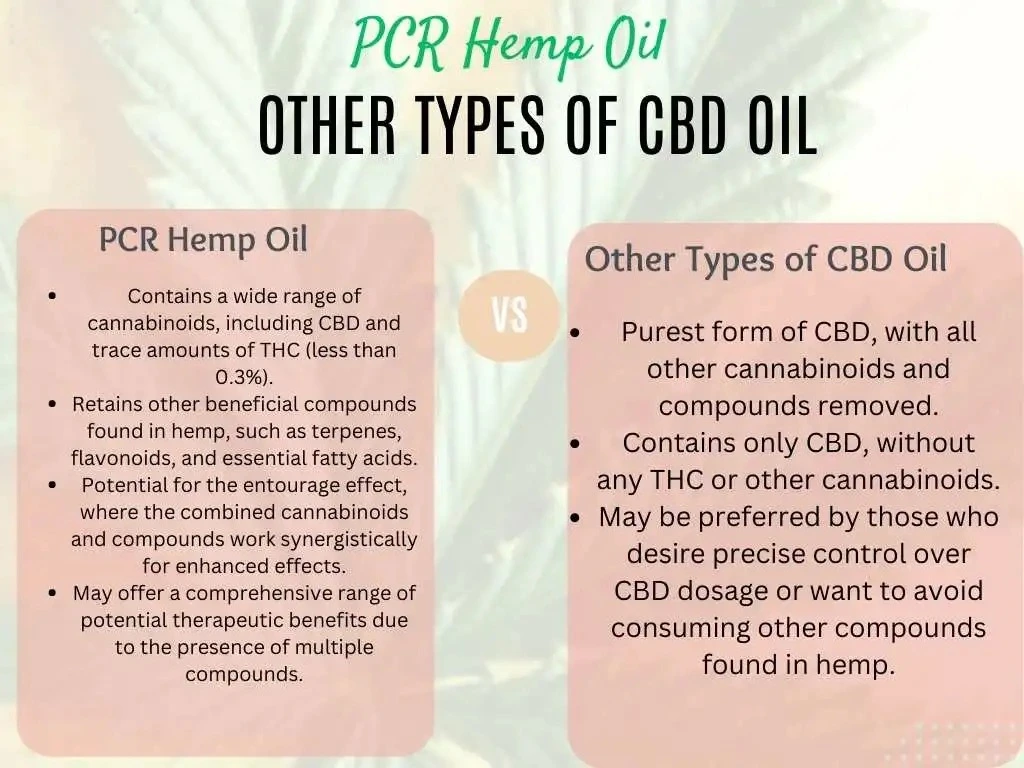
PCR hemp oil differs from other types of CBD oil, such as CBD isolate or broad-spectrum CBD oil, in that it contains a wider range of phytocannabinoids and compounds.
While CBD isolate contains only CBD, PCR hemp oil provides a more holistic approach, harnessing the potential benefits of multiple cannabinoids and compounds working together synergistically.
Is PCR hemp oil the same as CBD oil?
PCR stands for “phytocannabinoid-rich,” and it refers to hemp oil that contains a wide range of phytocannabinoids, including CBD (cannabidiol), THC (tetrahydrocannabinol), and other beneficial compounds found in the hemp plant. PCR hemp oil is derived from industrial hemp, legally mandated to have a THC content of less than 0.3%.
In contrast, CBD oil specifically refers to oil that is extracted from the hemp plant and contains CBD as the primary cannabinoid. While PCR hemp oil can contain various cannabinoids, including CBD, CBD oil focuses primarily on extracting and utilizing CBD as the dominant cannabinoid.
CBD oil can be derived from PCR hemp oil by further refining it to remove other cannabinoids and compounds, resulting in a product with higher concentrations of CBD.
So while CBD oil is a type of PCR hemp oil, not all PCR hemp oil is CBD oil. PCR hemp oil can contain varying levels of CBD, THC, and other cannabinoids, depending on the extraction and refinement process used. It’s essential to read product labels and descriptions carefully to understand the specific cannabinoid profile and composition of the hemp oil you are considering.
What is the difference between PCR hemp oil and CBD oil?
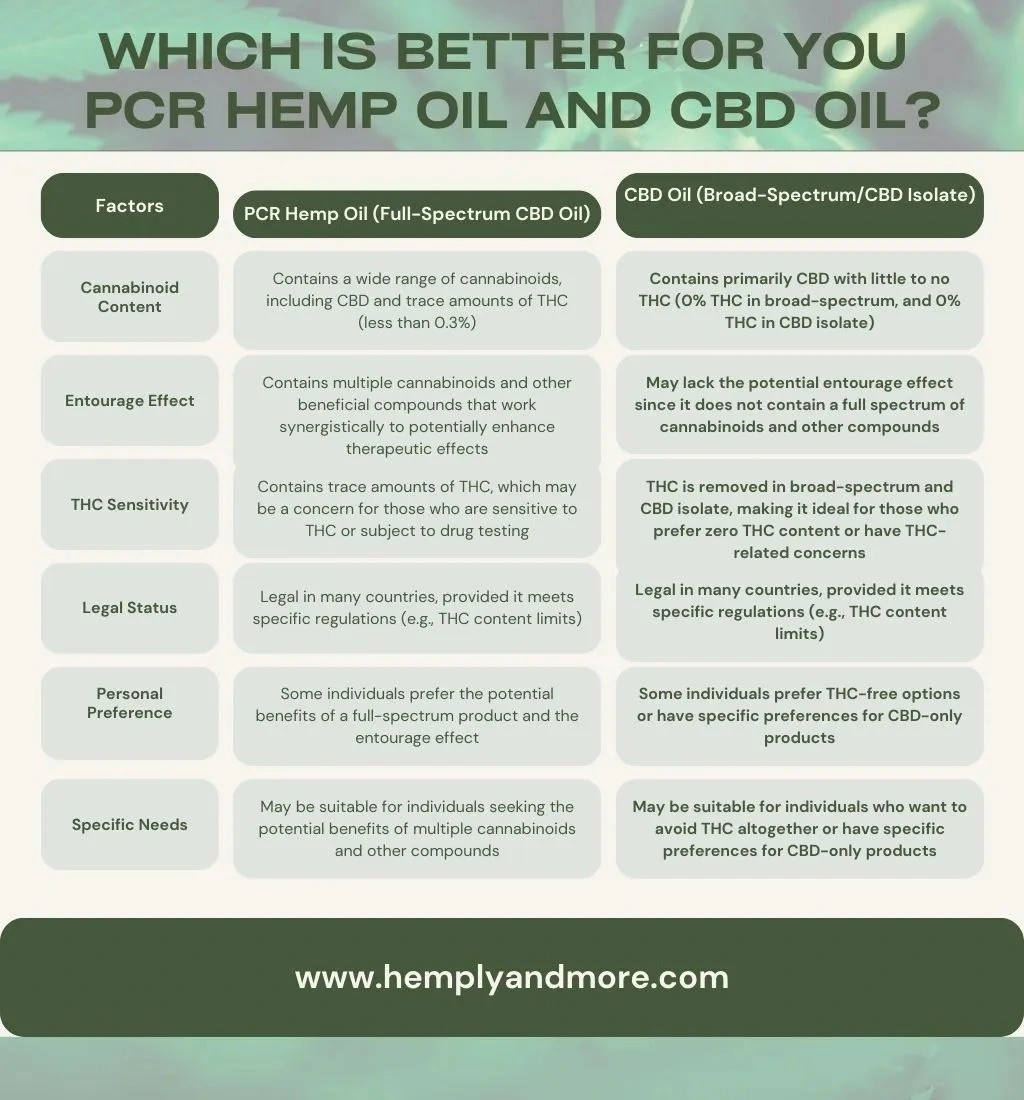
Certainly! Here’s a table highlighting the key differences between PCR hemp oil and CBD oil: CBD oil can refer to both full-spectrum CBD oil, which contains multiple cannabinoids including CBD and THC (within legal limits), as well as broad-spectrum CBD oil, which is similar but with THC removed.
In contrast, CBD isolate is a form of CBD that consists solely of pure CBD without any other accompanying compounds. It undergoes a process to remove all other cannabinoids, terpenes, and plant materials, resulting in a highly purified form of CBD.
CBD isolate is preferred by some individuals who desire precise control over their CBD intake or those who wish to avoid consuming any other compounds found in hemp.The term “PCR hemp oil” is less commonly used and may be used interchangeably with CBD oil, typically referring to full-spectrum or broad-spectrum CBD oil.
| Aspect | PCR Hemp Oil | CBD Oil |
| Definition | Phytocannabinoid-rich oil derived from hemp | Oil specifically extracted for high CBD content |
| Cannabinoid Content | Contains a wide range of cannabinoids, including CBD and THC | Primarily contains CBD as the dominant cannabinoid |
| THC Content | May contain varying levels of THC (up to 0.3%) | Typically contains minimal or no THC |
| Cannabinoid Profile | Contains a broader spectrum of cannabinoids | Contains mainly CBD with minimal other cannabinoids |
| Extraction Process | Extraction methods may vary | May undergo additional refining to isolate CBD |
| Common Usage | Used for a variety of wellness purposes | Frequently used for its potential health benefits |
| Legal Status | Legal under federal law (if THC content is below 0.3%) | Legal under federal law (if THC content is below 0.3%) |
Can PCR Hemp Oil Get You High? Is it legal?
PCR hemp oil, or full-spectrum CBD oil, typically contains trace amounts of THC but not enough to produce psychoactive effects or get you high.
In the United States, industrial hemp, from which PCR hemp oil is derived, is legally required to contain less than 0.3% THC on a dry-weight basis. This low THC content ensures that consuming PCR hemp oil should not result in intoxication.
Regarding legality, the status of hemp-derived products, including PCR hemp oil, can vary by country and region. However, in many countries, including the United States, the production and sale of CBD products derived from hemp that meet specific regulatory requirements are legal.
The legal status of CBD products often depends on the THC content and the specific regulations of the jurisdiction in which they are sold.
It is crucial to recognize that individual experiences and preferences can differ significantly. When considering CBD products, it is always advisable to consult with healthcare professionals or trusted sources for guidance.
The quality and sourcing of the product are vital factors that determine its effectiveness and safety. Ensuring high-quality CBD products from reputable sources is essential for optimal results and a positive experience.
It’s important to note that individual experiences and preferences may vary, and it’s always advisable to consult with healthcare professionals or trusted sources when considering CBD products. Additionally, the quality and sourcing of the product play a crucial role in determining its effectiveness and safety.
FAQs
PCR oil tincture, a liquid form of PCR hemp oil, is typically consumed by placing it under the tongue (sublingually). Packaged in bottles with droppers for convenient administration, PCR oil tinctures are renowned for their high bioavailability, enabling efficient absorption and utilization by the body. These tinctures come in various strengths and may sometimes feature additional flavorings.
CBD (cannabidiol) is a specific cannabinoid found in cannabis plants. It is renowned for its potential therapeutic benefits and does not induce a psychoactive “high” effect.
On the other hand, PCR (Phytocannabinoid-Rich) refers to a comprehensive extract obtained from the hemp plant. It contains not only CBD but also a diverse range of other cannabinoids (such as CBG, CBN, and THC, typically below 0.3% in hemp-derived products), as well as terpenes and flavonoids. These components are believed to work synergistically, producing what is known as the “entourage effect,” thereby enhancing the health benefits of each other.
Conclusion
PCR hemp oil represents a significant advancement in CBD products, offering a comprehensive and natural approach to wellness. With its rich phytocannabinoid profile, potential therapeutic benefits, and broad-spectrum support, PCR hemp oil has garnered attention for its ability to promote overall well-being.
Before incorporating PCR hemp oil or any other supplement into your wellness routine, it is important to consult with a healthcare professional. By doing so, you can ensure that it aligns with your individual needs and circumstances.
Explore the potential benefits of PCR hemp oil and unleash its power for your well-being. To ensure the highest quality product, select reputable brands that prioritize factors such as quality, transparency, and third-party lab testing. By choosing such brands, you can have confidence in receiving a premium product that meets rigorous standards.
Embrace the wonders of nature and consider integrating PCR hemp oil into your journey toward optimal health and balance.