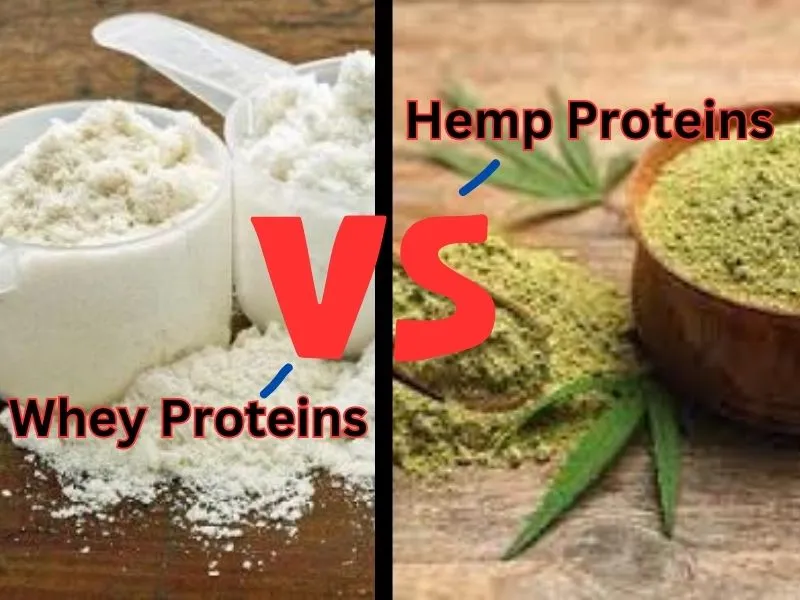
When it comes to protein supplements, two popular options stand out in the market: whey and hemp protein. Whether you’re a fitness enthusiast, an athlete, or simply someone looking to supplement their daily protein intake, choosing between these two can be challenging. In this blog, we’ll dive deep into the world of whey and hemp protein, exploring their differences, benefits, and drawbacks, and answering some frequently asked questions to help you make an informed decision.
Whey vs Hemp Protein
Hemp protein and Whey protein offer distinct advantages and cater to different dietary preferences. Whey protein, derived from milk, is a complete protein containing all essential amino acids, making it highly effective for muscle recovery and growth. It is rapidly absorbed and widely used by athletes and bodybuilders. On the other hand, hemp protein, sourced from the seeds of the hemp plant, is a plant-based protein option suitable for vegetarians and vegans. It also provides all essential amino acids, along with added fiber, omega-3 fatty acids, and minerals. While whey protein is more commonly used and easily accessible, hemp protein appeals to those seeking a plant-based, sustainable protein source with additional nutritional benefits. Ultimately, the choice between whey and hemp protein depends on individual dietary needs and preferences.
What is Whey Protein?
Whey protein is derived from milk during the process of cheese production, making it a valuable byproduct. It stands out as a complete protein since it encompasses all the essential amino acids necessary for the human body. Its rapid absorption and digestion make it an exceptional option for promoting post-workout recovery. Additionally, whey protein is abundant in branched-chain amino acids (BCAAs), which play a crucial role in the synthesis of muscle protein.
What is Hemp Protein?
On the contrary, hemp protein is sourced from the seeds of the Cannabis sativa plant. Rest assured, it contains negligible amounts of THC, the psychoactive component found in marijuana. Hemp protein serves as a plant-based protein option and is esteemed for its exceptional nutritional composition. It encompasses all nine essential amino acids, rendering it a complete protein. Moreover, hemp protein boasts a high fiber content, omega-3 fatty acids, and essential minerals such as magnesium and iron.
Certainly! Here’s a table summarizing the advantages and disadvantages of whey and hemp protein:
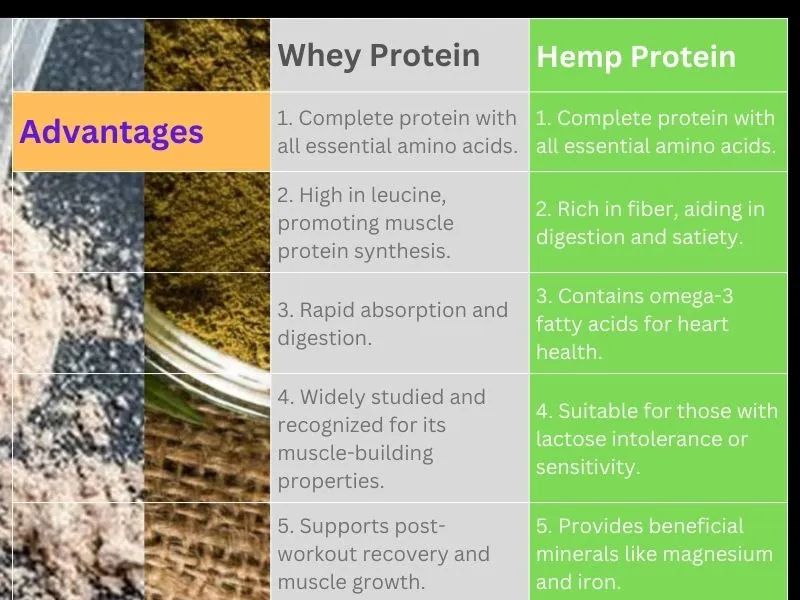
Advantages of whey & Hemp Protein
Whey protein and hemp protein are two popular dietary supplements known for their protein content and nutritional benefits. Whey protein, derived from milk, is a complete protein containing all essential amino acids. It is highly regarded for its rapid absorption and digestion, making it an ideal choice for post-workout recovery and muscle growth.
On the other hand, Hemp protein is sourced from the seeds of the Cannabis sativa plant. It is a plant-based protein option that also provides all essential amino acids, making it a complete protein. Hemp protein is valued not only for its protein content but also for its rich fiber content, omega-3 fatty acids, and essential minerals. Additionally, hemp protein is suitable for individuals seeking plant-based or vegan protein sources. Ultimately, the choice between whey protein and hemp protein depends on individual dietary preferences, goals, and any specific dietary restrictions.
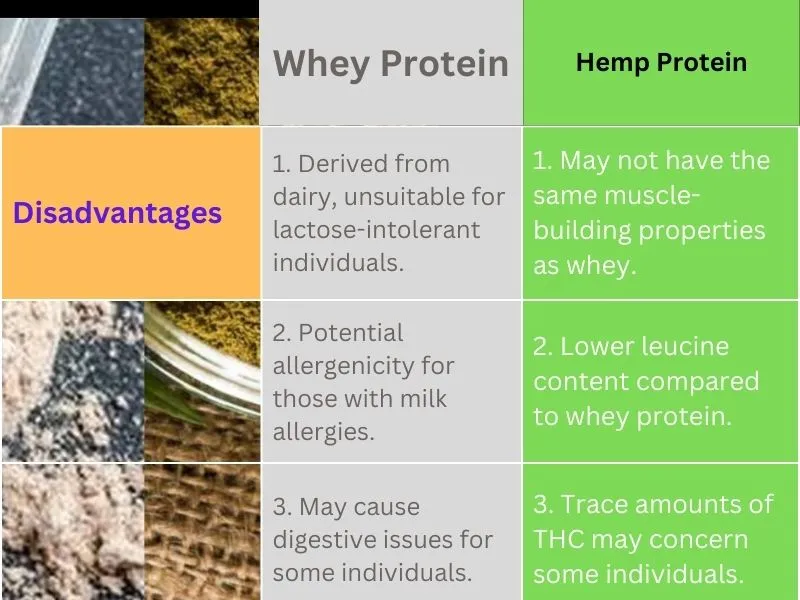
Disadvantages of whey & Hemp Protein
Whey Protein
When comparing whey protein to hemp protein, there are a few disadvantages associated with whey protein:
Dairy Sensitivity
Whey protein is derived from milk, which can pose a problem for individuals with lactose intolerance or dairy allergies. Some people may experience digestive issues, such as bloating, gas, or discomfort, when consuming whey protein.
Processing and Additives
The process of extracting whey protein often involves several stages of filtration and purification. Some whey protein products may contain additives, artificial flavors, sweeteners, or preservatives. These additives may not be desirable for those seeking a more natural protein option.
Environmental Impact
Whey protein production generates a significant amount of waste, including lactose and other byproducts. The disposal of these byproducts can have environmental consequences if not managed properly.
Hemp Protein
On the other hand, hemp protein offers some advantages over whey protein, but there are a few potential disadvantages as well:
Taste and Texture
Hemp protein has a distinct earthy and nutty flavor that may not appeal to everyone. Its texture can be slightly grainy, which some individuals may find less enjoyable compared to the smooth texture of whey protein.
Lower Protein Content
Hemp protein typically contains a lower protein content compared to whey protein. While it still provides a good amount of protein, individuals who require higher protein intake for specific fitness goals may find whey protein more suitable.
Incomplete Amino Acid Profile
Although hemp protein is considered a complete protein, some individuals may argue that its amino acid profile is not as well-balanced as whey protein. However, this is not a significant concern for most people as long as they consume a varied diet.
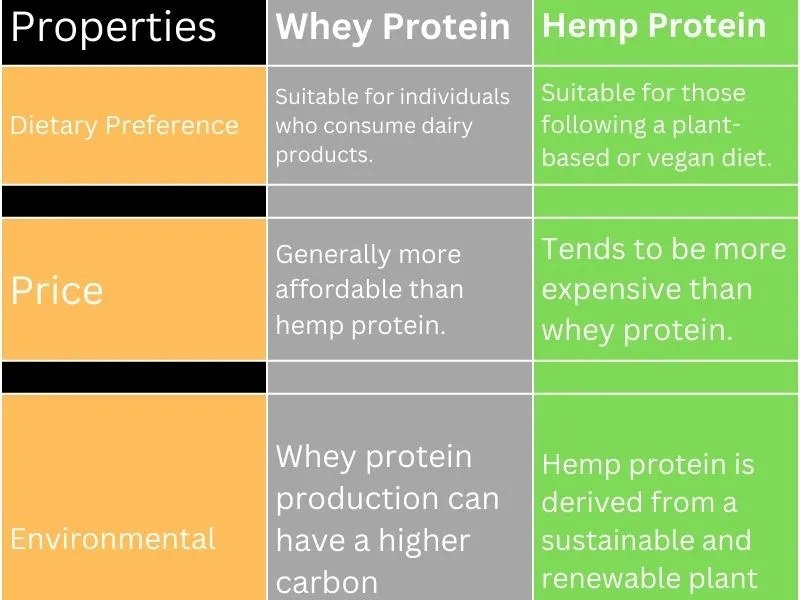
Usage of Protein
Please note that individual preferences, dietary restrictions, and specific health goals should be considered when choosing between whey and hemp protein. It’s recommended to consult with a healthcare professional or registered dietitian to determine which protein powder is most suitable for you.
Whey Protein Usage
As a dietary supplement, whey protein is widely utilized to enhance protein consumption, particularly among athletes, bodybuilders, and those aiming to facilitate muscle recovery and development. It can be obtained in different forms, such as whey protein concentrate, whey protein isolate, and whey protein hydrolysate.
.Whey Protein Intake Methods
- Protein Shakes: Whey protein powder can be mixed with water or your choice of liquid (such as milk, almond milk, or fruit juice) to make a protein shake. This method is the prevailing and user-friendly approach for consuming whey protein.
- Smoothies: Whey protein powder can be added to smoothies along with fruits, vegetables, yogurt, or other ingredients for a nutritious and protein-rich beverage.
- Protein Bars: Many commercially available protein bars contain whey protein, providing a convenient on-the-go option for protein supplementation.
- Baking and Cooking: Whey protein powder can be used as an ingredient in baking recipes or added to foods like pancakes, oatmeal, or yogurt to boost their protein content.
Dosage
The recommended daily dosage of whey protein varies depending on factors such as individual goals, activity level, and overall protein needs. As a general guideline, a typical serving size ranges from 20 to 30 grams of whey protein powder, which provides around 15-25 grams of protein.It is crucial to carefully read the product label and adhere to the manufacturer’s instructions regarding the brand and type of whey protein you are utilizing.
Hemp Protein Usage
It is commonly used by individuals following a plant-based or vegan diet, those with dairy allergies or sensitivities, or anyone seeking a nutrient-rich protein source.It’s powder, derived from the seeds of the hemp plant, is readily accessible for consumption.
Hemp Protein Intake Methods
- Protein Smoothies: Hemp protein powder can be added to smoothies along with fruits, vegetables, nut milk, or other liquid bases for a plant-based protein boost.
- Baking and Cooking: Hemp protein powder can be used as a substitute for flour or added to baked goods, energy bars, or homemade protein balls for an added protein punch.
- Sprinkling on Food: Hemp protein powder can be sprinkled onto cereal, yogurt, oatmeal, or salads to increase their protein content.
- Blending with Nut Butter: Mixing hemp protein powder with nut butter can create a protein-rich spread for sandwiches or as a dip for fruits and vegetables.
Dosage:
The recommended daily dosage of hemp protein varies depending on individual protein requirements and dietary needs. As a general guideline, a typical serving size ranges from 15 to 30 grams of hemp protein powder, providing around 10-15 grams of protein. It’s advisable to follow the instructions on the product packaging or consult a healthcare professional or registered dietitian for personalized guidance.
Individual protein needs may vary based on factors such as age, weight, activity level, and overall health goals. It’s important to listen to your body, consider your specific dietary needs, and consult with a healthcare professional or registered dietitian to determine the appropriate dosage and intake method for whey or hemp protein supplementation.
FAQs:
Q1: Which protein is better for muscle building, whey, or hemp protein?
Both whey and hemp protein can contribute to muscle building, but whey protein has been widely studied and is known for its superior muscle-building properties. Whey protein contains a higher concentration of leucine, an essential amino acid that plays a key role in stimulating muscle protein synthesis. However, hemp protein can still be an effective option, especially for those following a plant-based or vegan diet.
Q2: Is whey protein suitable for lactose-intolerant individuals?
Whey protein is derived from milk, so it naturally contains lactose. However, there are whey protein isolates and hydrolysates available that undergo additional processing to remove most of the lactose content. These forms of whey protein are generally well-tolerated by individuals with lactose intolerance. Alternatively, hemp protein is a suitable lactose-free option for those with intolerance or sensitivity to dairy products.
Q3: Are there any allergenic concerns with whey or hemp protein?
Whey protein is derived from milk, and therefore, individuals with milk allergies or sensitivities should avoid it. On the other hand, hemp protein is generally well-tolerated and rarely causes allergic reactions. However, it’s always recommended to consult with a healthcare professional if you have any specific food allergies or concerns.
Q4: Which protein is better for overall health and well-being?
Both whey and hemp protein offer health benefits, but they differ in their nutrient profiles. Whey protein provides a complete amino acid profile and is particularly effective for muscle recovery, immune support, and promoting satiety. Hemp protein, in addition to its protein content, is rich in fiber and healthy fats, making it beneficial for digestion, heart health, and reducing inflammation. Choosing the right protein depends on your individual needs and dietary preferences.
Q5: Can hemp protein provide all the essential amino acids?
Yes, hemp protein is considered a complete protein source as it contains all nine essential amino acids required by the body. It is particularly rich in arginine, which plays a crucial role in maintaining cardiovascular health. However, the amino acid composition of hemp protein may not be as optimal as whey protein, especially in terms of leucine content, which is important for muscle protein synthesis.
Conclusion
When comparing whey and hemp protein, it’s important to consider your dietary preferences, health goals, and any specific concerns or allergies. Whey protein is renowned for its muscle-building properties, rapid absorption, and high leucine content. Hemp protein, on the other hand, offers a plant-based alternative with a complete amino acid profile, fiber, and healthy fats.
Ultimately, the choice between whey and hemp protein comes down to individual needs and preferences. If you consume dairy products and prioritize muscle-building, whey protein may be the ideal choice. On the other hand, if you follow a plant-based diet or have specific dietary restrictions, hemp protein can be a valuable addition to your nutritional regimen.
Remember, protein powders should complement a balanced diet and should not be a substitute for whole foods. As always, it’s best to consult with a healthcare professional or registered dietitian to determine the protein supplement that aligns with your unique requirements.