Yoga is a well-liked exercise with several psychological and physical advantages. Nonetheless, for some practitioners, knee soreness following a yoga session might be a regular problem.
Knee Pain After Yoga
Yoga-related knee pain can result from several conditions, including overuse or repetitive strain injuries, improper alignment during poses, a lack of warm-up or cool-down exercises, pre-existing conditions like arthritis or meniscus tears, trauma or sudden injury to the knee, and improper warm-up or cool-down exercises.
We’ll talk about some of the typical reasons knee pain occurs after yoga in this blog post, as well as some tactics for managing knee pain and preventative measures.
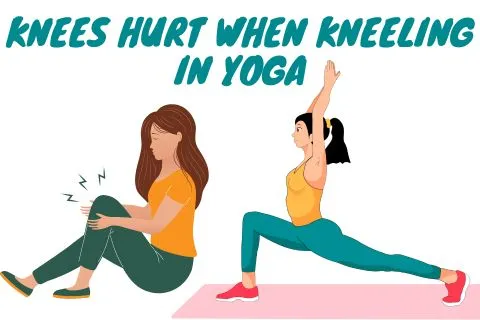
Yet it’s also a physical activity, frequently a strenuous one. As a result, if done improperly, it may potentially result in discomfort or even serious harm. One of my medical friends recently told me he had never seen this many yoga-related joint and muscle problems.
He refers to herniated discs, ruptures, pulls, and tears as “problems.” All of these can potentially stop yoga practitioners in their tracks—and do so daily. Knee pain is more common among people working in the cold than in those in normal temperature
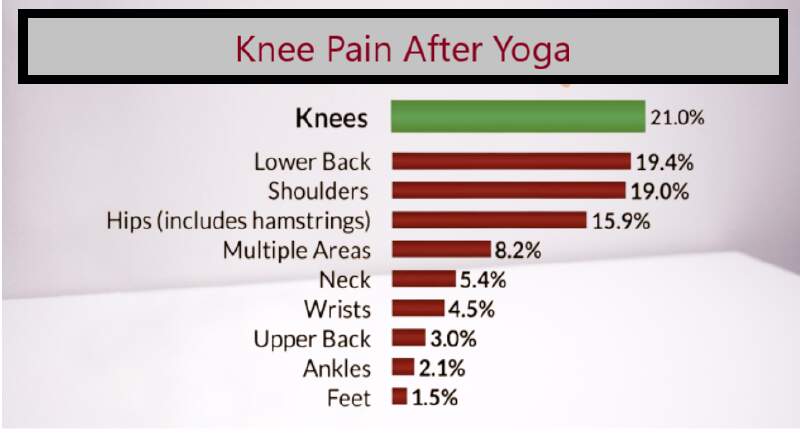
Common Reason for Knee Pain After Yoga
Yoga is a great way to improve flexibility, strength, and overall well-being. However, it is common for individuals to experience knee pain after practicing yoga. There are several reasons why this may occur
1. Overuse or repetitive strain injuries:-
Overuse or repetitive strain injuries are one of the most frequent reasons of knee pain after yoga. Practitioners may experience this if they continually hold a certain pose or push themselves too hard during a session. Incorrect alignment when performing postures is another factor that can lead to pain in the knee joint.
Knee pain can also be caused by improper warm-up or cool-down activities that do not adequately prepare the body for the demands of yoga practice.
Pre-existing disorders like arthritis or meniscus tears may also bring on knee pain after yoga. Some yoga positions and motions might aggravate these illnesses, causing pain and discomfort. Last but not least, sudden or traumatic injury to the knee might result in severe discomfort and demand quick medical attention.
2. Incorrect Alignment During Poses:-
Yoga poses with improper alignment can place too much pressure on the knee joint, resulting in soreness after practise. When practitioners press their bodies into positions without using the right alignment or technique, this might happen.
For instance, if the heels are not properly planted, positions like the Forward Fold or Downward Dog pose may put strain on the knees. Practitioners should concentrate on good alignment and technique, make adjustments as needed, and work with an experienced yoga teacher to guarantee proper form to prevent injuries caused by poor alignment.
3. Improper warm-up or cool-down activities:
Knee pain after yoga can be caused by improper warm-up or cool-down movements that do not adequately prepare the body for the demands of the yoga practice. Exercises that improve circulation and warm up the muscles, like the Sun Salutations, can be done before cool-down poses that stretch and relax the muscles, such the Pigeon Pose. The knee joint may become overworked and painful by skipping out on these workouts. To avoid injuries, practitioners should warm up and cool down correctly before and after their yoga practice.
4. Pre-Existing Conditions:
Pre-existing disorders like arthritis or meniscus tears may also bring on knee pain after yoga. Some yoga positions and motions might aggravate these illnesses, causing pain and discomfort.
In order to avoid injuries, those with pre-existing ailments should speak with their doctor before beginning a yoga practise and practise with a skilled yoga instructor who can adjust poses to suit their needs. Moreover, practitioners should focus on their bodies and avoid uncomfortable or painful poses.
Yoga Poses can cause Knee Injuries:
While yoga can be a great way to improve flexibility, strength, and overall health, certain poses can put stress on the knees and potentially lead to injury. Some common yoga poses that can cause risk of knee pain are as under but training from a qualified yoga instructor can reduce this risk
Hero’s Pose:-
Heroic pose In this kneeling/sitting position, the hips must inwardly rotate, the polar opposite of Lotus pose’s hip motion. Lack of hip flexibility causes tension on the inside of the knees, which increases the risk of medial meniscus cartilage injury or tearing.
Modifications are required to prevent damage if the Hero’s pose generates pain, compressing, or a twisting sensation in the knees. To improve alignment and help you relax into the pose, slightly open the knees, position a block or blanket under the buttocks and line the lower leg bones under the thighs.
Lotus Pose
To enter a full lotus pose with the feet on the opposing thigh, you must have flexible hips in external rotation. The severe sideways tension caused by forcing your foot into this position without the hip rotation allowed will cause a ligament tear or total rupture in your knees.
Modify lotus posture by sitting on a higher surface in a crossed ankle position, and support the thighs and knees with blocks or rolled-up blankets. Fully supporting the outer thighs allows the muscles in the legs and hips to loosen up and progressively stretch, increasing flexibility.
Tree Pose
Particularly if you have hypermobile knees, it is simple to overextend or over-straighten the knee joint in several yoga poses. When the knee joints are “locked,” the quadriceps muscles are not fully engaged, and the movement is passive. This restricts movement and puts undue strain on the knee cartilage, particularly the medial meniscus, which can tear if you twist or make a rapid movement.
Furthermore, tendons and ligaments are vulnerable to tiny rips from overstretching. Strongly contract the quadriceps muscles and slightly bend your knees to prevent knee hyperextension. The knee joint will be protected by even a tiny micro bend where your knee is straight rather than overextended. To prevent locking the knees, it is advisable to gradually shift the weight forward from the heels to the balls of the feet.
For instant Relief for Knee Pain:-
some topical treatments such as Hemp Extract, Shea Butter, MCT Oil, Menthol (Ice Muscle Rub) may help to alleviate knee pain. It is important to consult a healthcare provider before using any new topical treatments to ensure they are safe and appropriate for your specific condition. Additionally, it’s important to note that topical treatments may only provide temporary relief and should be used in conjunction with other treatments, such as exercise, physical therapy, or medication, as recommended by a healthcare professional.
Tips To Avoid Knee Pain After Yoga:
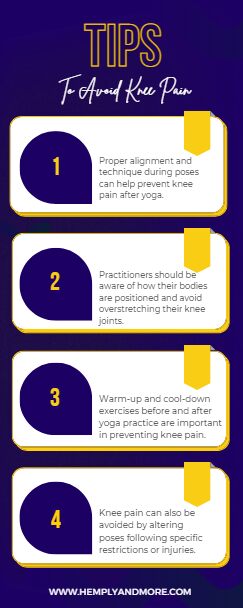
- Proper alignment and technique during poses can help prevent knee pain after yoga.
- Practitioners should know how their bodies are positioned and avoid overstretching their knee joints.
- Overuse injuries can also be avoided by gradually increasing effort and intensity.
- Warm-up and cool-down exercises before and after yoga practice are important in preventing knee pain.
- Knee pain can also be avoided by altering poses following specific restrictions or injuries.
- A medical professional can guide modifications to poses and exercises to help prevent pain and discomfort.
Managing Knee Pain After Yoga:-
If knee pain occurs after a yoga session, several strategies can be employed to manage the pain. Yoga practitioners may have frustrating knee soreness after their practice. Yet, there are a number of ways to stop and treat knee discomfort.
Knee pain can be avoided by doing the good alignment and technique postures, gradually increasing the difficulty and intensity, and including warm-up and cool-down movements. If knee discomfort does occur, it can be relieved with rest, ice, and painkillers.
Physical therapy and seeking medical guidance can both be beneficial in controlling knee discomfort. Yoga practitioners can continue to benefit from the many advantages of this age-old discipline by taking good care of their knees.
Related Article: Are Hot Tubs Good For Sore Muscles
Practice Proper Alignment:
In yoga, practising appropriate alignment is crucial to avoid knee pain. This entails avoiding overextending or hyperextending the knees during postures and aligning them with the ankles and hips.
Modify poses:
If you experience knee pain during a particular pose, consider modifying the pose or using props such as blocks or blankets to support your knees.
Strengthen your Knees:
Yoga poses that strengthen the muscles around your knees might reduce knee pain. In your program, include exercises like leg lifts, lunges, and squats to strengthen your glutes, hamstrings, and quadriceps.
Rest and Recover:
Taking time off and letting your body heal if you experience knee pain after practising yoga is imperative. Avoid performing poses that worsen the pain, and think about applying ice to your knees. Or taking an anti-inflammatory drug to lessen swelling and discomfort.
FAQS
Is it normal for knees to hurt after yoga?
Why do my joints hurt after yoga?
- If you are new to yoga or have recently increased the frequency or intensity of your practice, you may be overusing your joints, causing them to become inflamed and painful.
- Yoga poses require proper alignment to avoid putting unnecessary strain on your joints.
- If you are not aligning your body correctly, you may put too much stress on your joints, leading to pain.
- If you have a pre-existing joint condition such as arthritis, bursitis, or tendonitis, the movements and positions required in yoga may exacerbate your symptoms
What is the most common knee injury in yoga?
How to cure knee pain by yoga?
Yoga can be an effective way to help alleviate knee pain by strengthening and stretching the muscles around the knee joint, improving flexibility, and promoting relaxation.
3 replies on “Knee Pain After Yoga -Causes and Stop Suffering”
Hi waqar you have mention ice muscles rib for instant relief. Can its used able for under 18…
Let me know
How to used ice muscles rub
Very nice article I visited your website http://www.hemplyandmore.com